Point-in-time clinical exams and lab results — radiology (CT facial sinuses, MRI brain, coronary CT, EEG), full blood & urine panel (71 markers), gut microbiota sequencing and AUDIT.Exames clínicos pontuais e resultados laboratoriais — radiologia (TC dos seios da face, RM do encéfalo, angio-TC coronariana, EEG), painel completo de sangue e urina (71 marcadores), sequenciamento da microbiota intestinal e AUDIT.
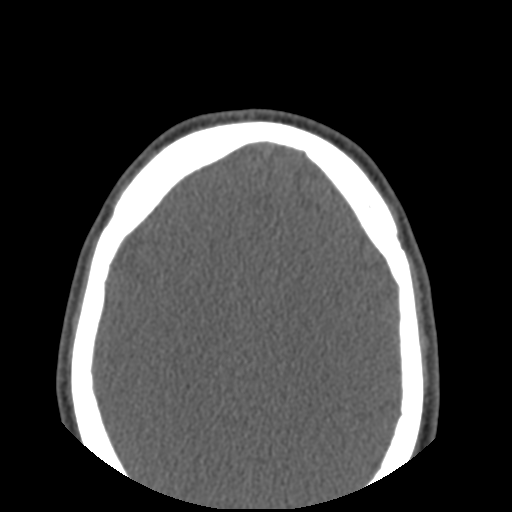
Volumetric multi-detector CT, no IV contrast. Indication: facial trauma (post bicycle accident, 5 January 2026). Requesting physician: Dr. José Roberto Chodraui (CRM 54911). 707 axial slices — scrub the slider, scroll over the image, click-and-drag vertically, or use the arrow keys to navigate. Tomografia computadorizada multidetector volumétrica, sem contraste endovenoso. Indicação: trauma facial (após acidente de bicicleta, 5 de janeiro de 2026). Médico solicitante: Dr. José Roberto Chodraui (CRM 54911). 707 cortes axiais — arraste o controle, role o cursor sobre a imagem, clique e arraste verticalmente, ou use as setas do teclado para navegar.
Multiplanar T1, T2 (with fat suppression), FLAIR, susceptibility and diffusion sequences, followed by 3D / 2D T1 with gadolinium. TOF and contrast-phase angiographic acquisitions of the intracranial arteries and veins. 717 frames across 14 acquired series — scrub the slider, scroll over the image, click-and-drag vertically, or use the arrow keys. Sequências multiplanares T1, T2 (com supressão de gordura), FLAIR, suscetibilidade magnética e difusão, seguidas de aquisições 3D / 2D em T1 com gadolínio. Aquisições angiográficas TOF e fase de contraste das artérias e veias intracranianas. 717 imagens em 14 séries adquiridas — arraste o controle, role sobre a imagem, clique e arraste verticalmente ou use as setas.
64-row multi-detector helical CT with iterative reconstruction software for radiation-dose reduction. Non-ionic iodinated IV contrast (350 mg/ml). Pre-medication: metoprolol 50 mg PO + isosorbide 3.75 mg SL. Performed at Albert Einstein Medicina Diagnóstica, São Paulo. 2,206 frames across 19 acquired series — scrub the slider, scroll, drag, or arrow-key to navigate. TC helicoidal multislice de 64 fileiras de detectores com software de reconstrução iterativa para redução de dose. Contraste iodado endovenoso não iônico (350 mg/ml). Pré-medicação: metoprolol 50 mg VO + isossorbida 3,75 mg SL. Realizado no Albert Einstein Medicina Diagnóstica, São Paulo. 2.206 imagens em 19 séries adquiridas — arraste o controle, role, arraste ou use as setas para navegar.
| Artery | Score (Agatston) | Volume |
|---|---|---|
| Left main coronary trunk | 0 | 0 |
| Anterior descending (LAD) | 7 | 10 |
| Circumflex | 0 | 0 |
| Right coronary | 0 | 0 |
| Total | 7 | 10 |
Calcium score of 7 — between the 75th and 90th percentiles for age and sex.
Luminal-reduction grading: slight < 50% · moderate 50–70% · severe > 70%.
Digital EEG performed in waking, drowsy and sleep states. Activated by hyperventilation and intermittent photostimulation. 16 trace pages — scrub the slider, scroll, drag or arrow-key to step through. EEG digital realizado em estados de vigília, sonolência e sono. Ativado por hiperpneia e fotoestimulação intermitente. 16 páginas de traçado — arraste o controle, role, arraste ou use as setas para avançar.
71 laboratory markers across 13 panels. Source document: a clinician-style report generated for the patient (Portuguese original); panel and test names translated to English here, with the Portuguese term shown in parentheses where translation is non-obvious. Reference ranges, bar visualisations, per-test commentary and "possible contributing factors" preserved from the original report (translated). 71 marcadores laboratoriais em 13 painéis. Documento de origem: um relatório em estilo clínico gerado para o paciente (original em português); nomes de painéis e exames traduzidos para inglês aqui, com o termo em português mostrado entre parênteses quando a tradução não é óbvia. Intervalos de referência, visualizações em barra, comentários por exame e "possíveis fatores contribuintes" preservados do relatório original (traduzido).
Clinical priority order. None require urgent action — all are talking points for the next follow-up with Dr. Tischer.
Markers in the optimal range — a solid baseline worth maintaining.
14.40 µmol/L is above reference (5–12) — an independent cardiovascular risk factor. Common causes: functional deficiency of B6, B12 or folate; MTHFR polymorphism; borderline kidney function. Although serum B12 and folate are normal, elevated homocysteine may indicate sub-optimal vitamin metabolism.
Action: bring this result to Dr. Tischer. Discuss MTHFR testing (already known: compound heterozygous from TotalGene) and consider methylfolate / methylcobalamine supplementation.
Total cholesterol slightly elevated (199 mg/dL) is offset by excellent HDL (76) and optimal LDL (95) — the actual clinical reading is favourable. Estradiol slightly above the male range (47.62 vs ≤ 39.8) may relate to body weight, prior alcohol use, or medication interaction.
Action: reassess in 3 months alongside weight evolution and the alcohol-abstinence trajectory. No isolated intervention needed now.
Creatinine at 1.30 mg/dL is at the upper limit, but eGFR remains > 60. May reflect muscle mass, hydration or medication. Low urinary specific gravity (1.005) suggests a dilute sample at the time of collection.
Action: repeat creatinine and urinalysis in 8–12 weeks with standardised hydration. Consider Cystatin C if it persists.
Optimal testosterone, excellent HDL, ideal HbA1c, vitamin D in the optimal range, preserved hepatic and kidney function despite the current medication profile, and confirmed Hepatitis B immunisation. These are strong baseline health markers.
Action: maintain hydration, moderate sun exposure, regular sleep and the alcohol abstinence started 10 April. Reassess full panel in 3–6 months.
16S rRNA V3/V4 DNA sequencing — Neoprospecta / BiomeHub. Stool sample 25 April 2024.Sequenciamento de DNA 16S rRNA V3/V4 — Neoprospecta / BiomeHub. Amostra fecal de 25 de abril de 2024.
Most recent self-administered AUDIT, April 2026, scored 13/40 — Harmful range. This is a 16-point drop from the 29/40 administration on 27 March 2026 (probable dependence). The drop is meaningful: Q-by-Q the patient has moved out of the dependence band into the harmful band, with no reported morning drinking and a reduced binge frequency. AUDIT autoaplicado mais recente, abril de 2026, com pontuação de 13/40 — faixa nociva. Queda de 16 pontos em relação à aplicação de 29/40 em março de 2026, que situava o paciente na faixa de provável dependência.
Now in Harmful range — out of probable dependence. The intervention window the previous AUDIT identified (no morning drinking, high self-awareness) has been used productively. Q9 — alcohol-related injury within last year (other minor injury) — remains a fixed 4-point contributor and will only roll off 12 months after the original event.
Q-by-Q breakdown for the prior administration. Updated breakdown for the current 13/40 score will be added once available.
| Q | Topic | Score | Max |
|---|---|---|---|
| Q1 | Drinking frequency | 3 | 4 |
| Q2 | Typical quantity per session (7–9 units) | 3 | 4 |
| Q3 | Binge drinking frequency — weekly | 3 | 4 |
| Q4 | Loss of control once started — monthly | 2 | 4 |
| Q5 | Failure to meet normal expectations — weekly | 3 | 4 |
| Q6 | Morning drinking to manage withdrawal — never | 0 | 4 |
| Q7 | Guilt or remorse after drinking — daily | 4 | 4 |
| Q8 | Blackouts — weekly | 3 | 4 |
| Q9 | Injury as result of drinking — yes (other minor injury) | 4 | 4 |
| Q10 | Others concerned / suggested cutting down — yes | 4 | 4 |
| Total | 29 | 40 | |